"Energy efficient" gets thrown around in heat pump marketing without much grounding. Here's how to actually compare units, which NZ offerings genuinely sit at the top of the efficiency chart, and how much extra you'll spend upfront for the more efficient option (spoiler: it usually pays back within 4–6 years).
The ratings that matter (COP, SCOP, EER)
Three numbers tell you how efficient a heat pump actually is:
COP — Coefficient of Performance
Heating output divided by electrical input, measured at a specific test condition. COP 4.0 means the unit delivers 4 kW of heat for every 1 kW of electricity. Higher = better. NZ heat pumps typically range from COP 3.0 (entry-level) to COP 5.5 (premium). Published COPs are peak figures — real-world average is usually a touch lower.
SCOP — Seasonal Coefficient of Performance
COP averaged across a full heating season — including cold weather, defrost cycles, and partial-load operation. SCOP is a more honest single number than COP because it reflects how the unit actually runs in the real world. SCOP 4.5 is genuinely impressive; SCOP 3.5 is average; SCOP 2.8 means you're buying a power bill.
EER — Energy Efficiency Ratio (cooling)
COP's cooling-mode counterpart. Same idea — output divided by input — but measured for cooling. NZ residential heat pumps typically land at EER 3.5–5.0. Less critical for NZ buyers than COP/SCOP because most of our climate spend is on heating.
The premium-efficient models worth knowing
At any given size class, these are the most efficient residential heat pumps available in NZ today:
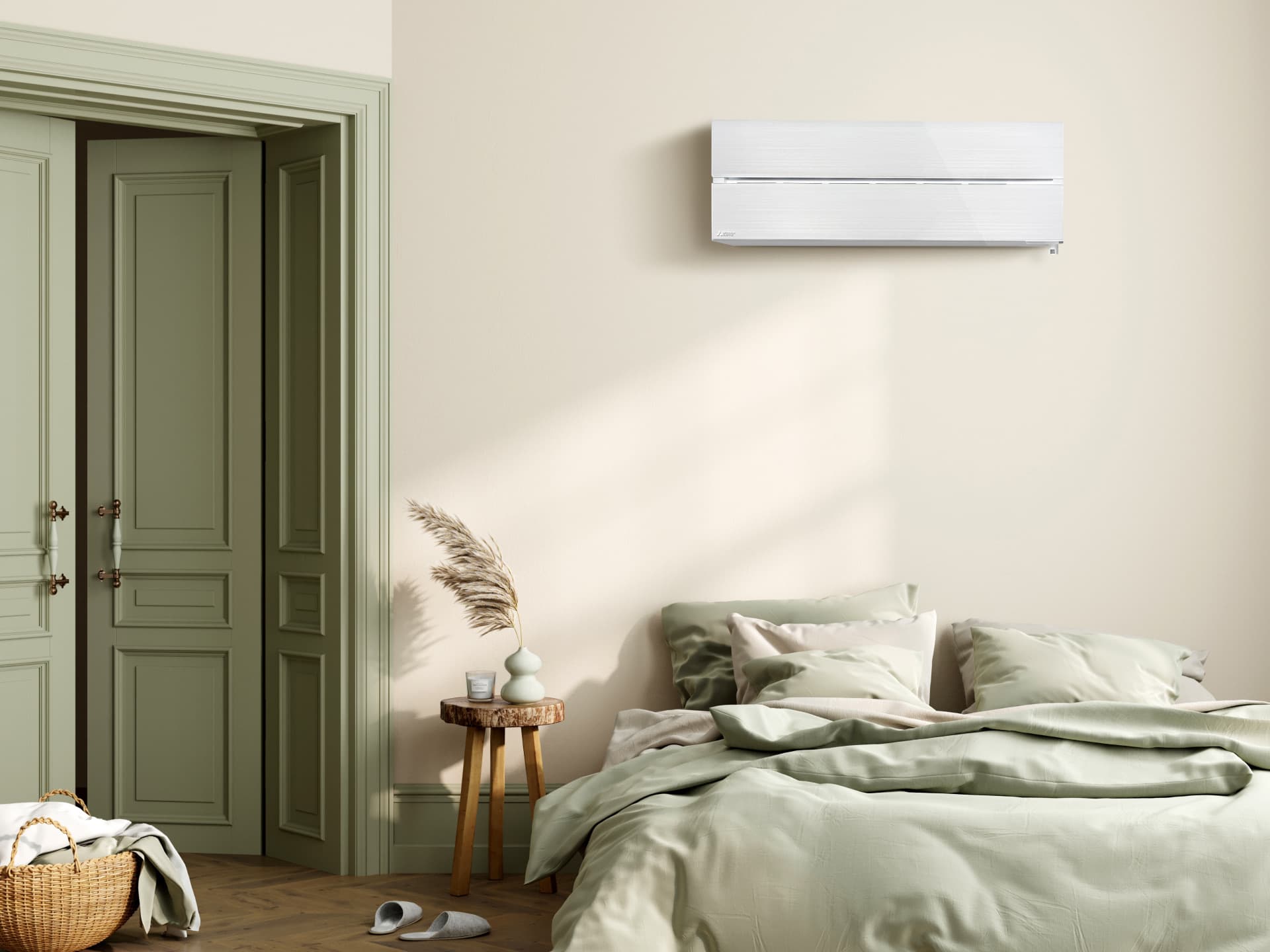
Mitsubishi Electric LN Series & EcoCore Designer
ME's premium high-wall lineup. COP figures sit at 5.2–5.5 depending on size, SCOP around 4.7–5.0. The EcoCore Designer additionally has a designer-aesthetic finish if the appearance matters. Both are quiet (down to 18 dBA), built well, and priced at the top of the range — but the running cost saves the difference back over 8–10 years for most households.
Daikin Zena & Cora premium models
Daikin's high-end residential line. COP comparable to ME LN Series (5.0–5.4), with strong real-world cold-weather performance. Smart controller integration is excellent. Pricing is usually a touch below equivalent ME premium, making this the "smart shopper's" premium choice.
Hitachi Premium Series
Hitachi's top-end residential range. Slightly lower peak COP than ME or Daikin (5.0–5.2) but arguably better SCOP because the units maintain efficiency at lower outdoor temperatures — useful for inland and South Island installs where winter mornings get harsh.
What "efficient" buys you in real money
A premium-efficiency unit costs ~$800–$1,500 more than an equivalent-size entry-level unit. Sounds significant. Here's the real-world maths for a Waikato family home with a heat pump running ~6 hours a day in winter and ~3 hours a day in summer:
- Entry-level (COP 3.0): ~$650/year in power for the heat pump alone
- Mid-range (COP 4.0): ~$490/year — saving $160/year
- Premium (COP 5.0+): ~$390/year — saving $260/year vs entry-level
Over a 12-year unit lifespan, the premium unit saves about $3,100 in power versus the entry-level. Add the typical 2–3 extra years of useful life that premium units deliver before replacement, and the actual lifetime cost difference flips — premium ends up cheaper.
Frequently asked questions
What is the most energy-efficient heat pump in NZ?
At any given size, the highest-efficiency residential heat pumps in NZ are the premium Mitsubishi Electric LN Series, Daikin Zena/Cora premium models, and Hitachi Premium Series — all hitting COP 5.0+ in heating mode. "Most efficient" depends on size though. A 2.5 kW premium unit and a 7 kW premium unit have similar efficiency ratios but very different total power draws.
What does COP mean on a heat pump?
Coefficient of Performance — how much heat the unit delivers per unit of electricity drawn. COP 4.0 means 4 kW of heating output for every 1 kW of electricity in. Higher is better. NZ heat pumps typically range from COP 3.0 (entry-level) to COP 5.5 (premium efficient). The published number is usually a peak figure measured at favourable conditions, so real-world average is slightly lower.
What's SCOP and why does it matter?
Seasonal Coefficient of Performance — average COP across an entire heating season including cold weather, defrost cycles, and partial-load operation. More realistic than the peak COP number printed on the box. SCOP 4.5 means the unit averaged 4.5x efficiency across a full winter. SCOP is what your power bill actually reflects.
Are 5-star heat pumps worth the extra cost?
Usually yes over 10+ years. A premium 5-star unit might cost $800 more than a 3-star equivalent but run 25% more efficiently, saving $150–$250 per year on a heavily-used unit. Over 10 years that's $1,500–$2,500 in saved power, plus the premium unit usually lasts longer before replacement. Cheap units can end up the most expensive.
Does a bigger heat pump use more power?
Yes — a 7 kW unit running at full output draws more electricity than a 2.5 kW unit running at full output. But correctly sized for the room, a properly sized unit runs at lower throttle and stays in its efficiency sweet spot. Oversizing wastes money; undersizing forces the unit to run at maximum constantly, also wasting money. Sizing matters more than star rating.
How much can I save on power with a more efficient heat pump?
Switching from old non-inverter to modern inverter premium: 25–40% saving on heating costs. Switching from electric resistance heaters to any heat pump: 60–70% saving. Switching from gas: 30–50%. For a typical Waikato family home, that often translates to $400–$1,200 saved per year.