Multi-split heat pumps let you heat and cool multiple rooms from a single outdoor unit. They sit in the middle ground between buying individual splits for each room and investing in a fully ducted system. Here is what they cost in NZ, when they make financial sense, and what to watch out for.
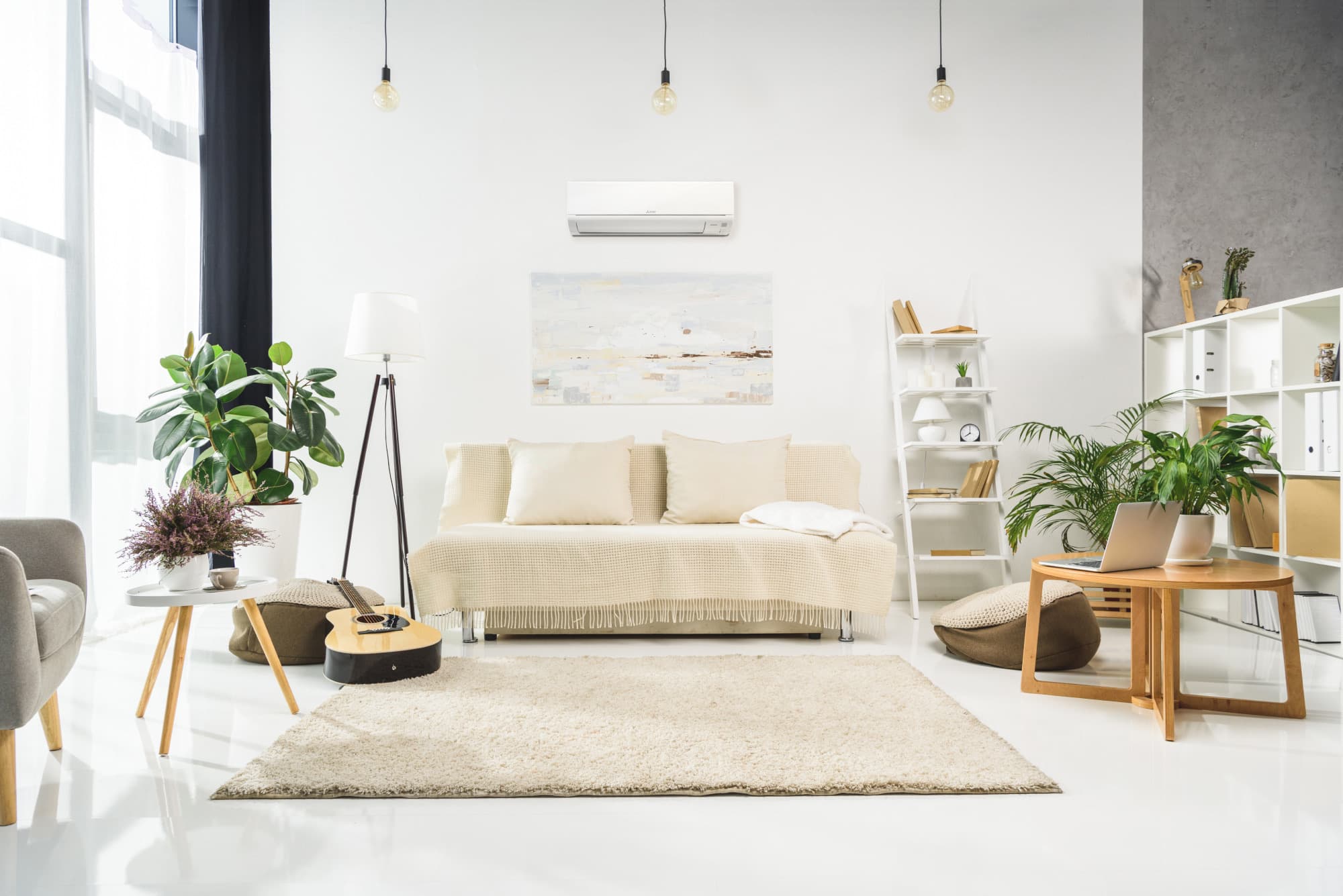
What is a multi-split system?
A standard split heat pump has one outdoor unit paired with one indoor unit. A multi-split has one outdoor unit connected to two, three, four, or five indoor units, each in a different room. Each indoor unit has its own remote control and can be set to different temperatures.
The outdoor unit is larger than a single-split outdoor unit because it needs enough capacity to run all the indoor units simultaneously. Each indoor unit connects back to the outdoor unit via its own set of refrigerant pipes, so the pipe routing is more complex than a single split.
Multi-split pricing: 2-way to 5-way
These are real installed prices for multi-split systems in the Waikato as of mid-2026. Prices include the outdoor unit, all indoor units, pipework, electrical, and commissioning.
| System | Installed price | vs individual splits | Outdoor units |
|---|---|---|---|
| 2-way multi-split | $5,500-$7,500 | Similar or slightly cheaper | 1 (vs 2) |
| 3-way multi-split | $7,500-$10,000 | Save $1,500-$3,000 | 1 (vs 3) |
| 4-way multi-split | $10,000-$14,000 | Save $2,000-$4,000 | 1 (vs 4) |
| 5-way multi-split | $13,000-$18,000 | Save $2,500-$5,000 | 1 (vs 5) |
These prices assume mid-range brands (Daikin Cora or Mitsubishi MSZ-AP indoor units) and reasonably straightforward pipe routing. Premium indoor units, long pipe runs, or complex access push the price toward the higher end.
When multi-split beats individual splits
Multi-split is not always the better option. Here is when it makes clear financial and practical sense.
- 3+ rooms need heat pumps: this is the sweet spot. The savings on outdoor units and installation labour outweigh the more complex pipe routing
- Limited outdoor space: apartments, townhouses, and homes with small sections may not have room for 3-4 separate outdoor units. One multi-split outdoor unit solves this
- Aesthetics outside: one outdoor unit looks better than a row of them along the side of your house. Body corporates and landlords often prefer this
- New build: if you are building a new home and want heat pumps in multiple rooms, planning multi-split pipe runs during construction is much cheaper than retrofitting
When individual splits are better
Sometimes separate systems for each room are the smarter choice.
- Only 1-2 rooms: the cost advantage of multi-split does not kick in until you reach 3 rooms. For 2 rooms, individual splits are often the same price or cheaper
- Rooms are far apart: if the rooms are on opposite ends of the house, the pipe runs to a single outdoor unit become very long and expensive. Individual splits with short pipe runs may be cheaper
- Redundancy matters: with multi-split, if the outdoor unit fails, every room loses heating. With individual splits, one failure only knocks out one room
- Staged installation: if you want to add units one room at a time over several years, individual splits are more flexible. Multi-split needs to be planned and piped as one job
When ducted is better than multi-split
At the 4-5 unit level, ducted systems start competing on price and often win on aesthetics and convenience. Here is when to consider ducted instead.
- 5+ rooms: a 5-way multi-split at $13,000-$18,000 is approaching the cost of a ducted system ($14,000-$20,000) which gives you whole-home coverage and no visible indoor units
- Clean aesthetic priority: ducted systems hide everything in the ceiling. All you see are discreet grilles. Multi-split still has wall-mounted or floor-standing indoor units visible in every room
- Good ceiling cavity: if your home has adequate roof space for ductwork (most single-storey NZ homes do), ducted is cleaner to install than running 4-5 separate pipe sets for multi-split
- New build: for new construction with 4+ zones, ducted is almost always better value than multi-split because the ductwork is designed into the plans from the start
Brands for multi-split in NZ
Not all brands are equally strong in the multi-split space. These are the ones we recommend and install.
- Daikin:arguably the strongest multi-split range in NZ. Their multi-split outdoor units are well-matched to the Cora indoor range, pricing is competitive, and the system supports up to 5 indoor units. Daikin's smart controller handles multi-zone well
- Mitsubishi Electric: excellent reliability and the widest parts network in NZ. Their MXZ outdoor units pair with MSZ-AP or LN indoor units. As an authorised Mitsubishi Electric installer, we install their multi-split systems regularly
- Hitachi: strong multi-split offering, particularly for cold-climate performance. Good build quality but slightly fewer model options than Daikin or Mitsubishi
- Fujitsu: competitive pricing on multi-split systems. A good budget option if you want a major brand without premium pricing
What drives the cost up
Multi-split installations are more complex than single splits. Several factors can push the price above the ranges quoted above.
- Long pipe runs: each indoor unit needs its own pair of copper pipes running back to the outdoor unit. Every extra metre adds $50-$80. If indoor units are spread across the house, pipe costs add up fast
- Pipe concealment: exposed pipes on the exterior wall are cheapest. Running pipes through the ceiling cavity, walls, or under the floor for a clean finish costs more in labour and materials
- Electrical upgrades: a multi-split outdoor unit draws more power than a single split. Some older homes need a switchboard upgrade or new dedicated circuit to handle the load - budget $300-$800 for this if needed
- Access difficulty: second-storey installs, tight crawl spaces, or homes with limited ceiling access add labour time. Two-storey homes with bedrooms upstairs and living areas downstairs are more complex to pipe than single-level homes
- Premium indoor units: swapping standard indoor units for premium models (LN Series, Daikin US7) adds $800-$1,500 per unit to the total cost
Installation timeline
Multi-split installations take longer than single splits. A 2-way system is typically a one-day job. A 3-4 way system is usually 1.5-2 days. A 5-way system can take 2-3 days depending on complexity.
The installation involves mounting all indoor units, placing the outdoor unit, running separate pipe sets from each indoor unit to the outdoor unit, connecting all electrical, vacuum-testing the system, charging with refrigerant, and commissioning each zone. It is a bigger job than most people expect, which is why the labour component of the price is significant.
Frequently asked questions
How much does a multi-split heat pump cost in NZ?
A multi-split heat pump system in NZ costs between $5,500 and $18,000 installed depending on how many indoor units you need. A 2-way system runs $5,500-$7,500, a 3-way is $7,500-$10,000, a 4-way is $10,000-$14,000, and a 5-way is $13,000-$18,000. These prices include the outdoor unit, all indoor units, pipework, electrical, and commissioning.
Is multi-split cheaper than individual heat pumps?
For 2 rooms it is roughly the same cost or slightly cheaper. For 3+ rooms, multi-split starts saving you money compared to individual splits because you only need one outdoor unit instead of three or more. A 3-way multi-split typically saves $1,500-$3,000 compared to three separate split systems, plus you only have one outdoor unit taking up space.
What is the difference between multi-split and ducted?
Multi-split uses one outdoor unit connected to multiple individual wall-mounted or floor console indoor units via separate pipe runs. Ducted uses one outdoor unit connected to a single concealed indoor unit in the ceiling, with ductwork distributing air to each room through ceiling grilles. Multi-split gives independent room control; ducted gives a cleaner look with no visible indoor units.
Can I mix different indoor unit types on a multi-split?
Yes - most multi-split systems allow you to mix high-wall units, floor consoles, and even ceiling cassettes on the same outdoor unit. This is one of the advantages of multi-split over ducted. For example, you could have a floor console in the lounge and high-wall units in the bedrooms, all running from one outdoor compressor.
What brands are best for multi-split in NZ?
Daikin and Mitsubishi Electric both offer strong multi-split ranges in NZ. Daikin is particularly well-regarded for multi-split flexibility and pricing. Mitsubishi Electric multi-split systems are equally reliable with excellent parts availability. Both support up to 5 indoor units from a single outdoor unit in their residential ranges.
What are the downsides of multi-split systems?
The main downside is that if the single outdoor unit fails, all rooms lose heating and cooling at once. With individual splits, one failure only affects one room. Multi-split pipe runs can also be more complex and expensive if indoor units are spread far apart. And you cannot run some rooms in heating while others are in cooling mode.