Small rooms need a different approach to heat pump selection than large living areas. Getting the wrong size - especially too large - is the most common mistake we see in bedrooms, home offices, and small apartments across the Waikato. Here is how to pick the right unit for spaces between 10 and 20 square metres.
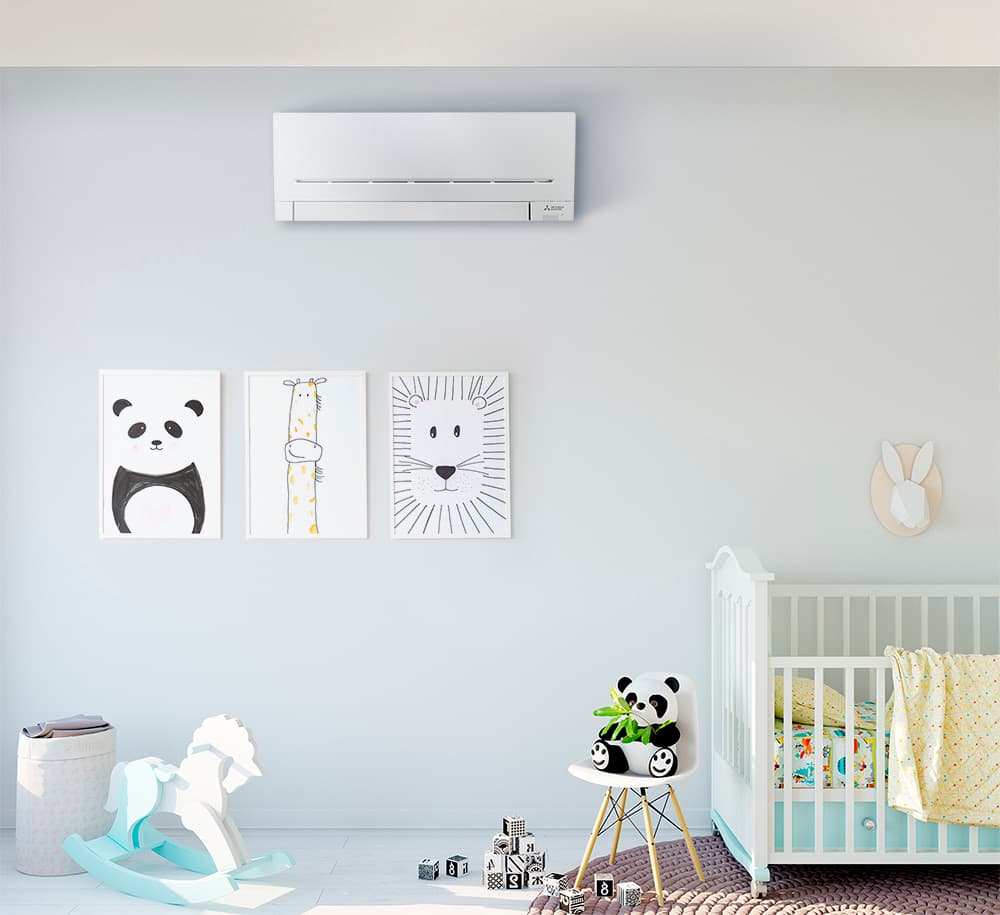
What capacity do you actually need?
For small rooms in a typical Waikato home, you are looking at the 2.0-3.5 kW range. Here is a rough guide based on room size and insulation quality.
| Room | Size | Good insulation | Poor insulation |
|---|---|---|---|
| Small bedroom | 10-12 sqm | 2.0 kW | 2.5 kW |
| Standard bedroom | 12-16 sqm | 2.0-2.5 kW | 2.5 kW |
| Home office / study | 8-14 sqm | 2.0 kW | 2.5 kW |
| Small living area | 16-20 sqm | 2.5 kW | 3.5 kW |
Adjust upward if the room has high ceilings (over 2.7m), large windows, or faces south. Adjust downward if the room is internal (no external walls) or well-sheltered.
Why oversizing is a problem in small rooms
In a large living room, a slightly oversized unit is not a big deal. In a small room, it creates real problems.
- Short-cycling: the unit reaches the target temperature in minutes, shuts down, then restarts when the temp drops. This on-off cycling wastes energy and wears out the compressor
- Poor dehumidification: the unit does not run long enough to pull moisture from the air. This is especially bad in bedrooms where moisture from breathing builds up overnight
- Temperature swings: the room overshoots the set temperature, then cools too far before the unit kicks back in. Not comfortable for sleeping
- Unnecessary cost: you paid more for a larger unit that performs worse in your space. A 5.0 kW unit in a 12 sqm bedroom is not better - it is worse
Noise levels matter more in small rooms
In a large open-plan living area, 25 dBA is barely noticeable. In a 12 sqm bedroom at 2am, it is the difference between sleeping and not sleeping. For bedrooms, prioritise units with a quiet or sleep mode rated at 21 dBA or below.
Also consider the outdoor unit noise if it will be located near a bedroom window. Premium models typically have quieter outdoor units (46-48 dBA) compared to budget models (50-52 dBA).
Best models for small rooms in NZ
These are the models we install most often in small rooms across the Waikato. All are from major brands with strong NZ support.
Mitsubishi Electric MSZ-AP15 / MSZ-AP20
Our most-recommended unit for small bedrooms and studies. The AP15 delivers 1.5 kW (ideal for very small rooms or internal rooms) and the AP20 delivers 2.0 kW. Both feature Wi-Fi control, quiet mode at 19 dBA, and a compact footprint. As an authorised Mitsubishi Electric installer, these are the units we know inside out. Installed price: $2,500-$3,200.
Mitsubishi Electric MSZ-AP25
The 2.5 kW step-up for slightly larger bedrooms or rooms with poorer insulation. Same quiet operation and Wi-Fi connectivity as the smaller models. This is the sweet spot for most standard NZ bedrooms. Installed price: $2,800-$3,400.
Daikin Cora FTXV20 / FTXV25
Daikin's volume seller in 2.0 kW and 2.5 kW capacities. Built-in Wi-Fi, quiet mode at 19-20 dBA, and typically priced $200-$300 less than the equivalent Mitsubishi AP model. A strong alternative if budget is a factor. Installed price: $2,400-$3,200.
Fujitsu ASTG07 / ASTG09
Fujitsu's 2.0-2.5 kW range is the most affordable option from a major NZ brand. Good basic performance, decent noise levels, and reliable. The trade-off is fewer features and a slightly less refined build compared to Mitsubishi and Daikin. Installed price: $2,300-$2,900.
Compact dimensions
In small rooms, the physical size of the unit matters. You do not want a large indoor unit dominating a small wall. The good news is that small-capacity units are also physically smaller.
- Mitsubishi MSZ-AP20: 799mm wide x 299mm tall x 234mm deep
- Daikin Cora FTXV20: 770mm wide x 285mm tall x 234mm deep
- Fujitsu ASTG07: 770mm wide x 283mm tall x 209mm deep
All three are compact enough for tight wall spaces. They sit neatly above a door frame or in a narrow wall section between windows.
Placement tips for small rooms
Getting the position right is critical in a small space. A few centimetres of thought at the planning stage saves years of discomfort.
- Do not mount above the bed: cold air blowing down onto the pillow is uncomfortable and can cause neck stiffness. Mount on the wall opposite or adjacent to the bed
- Use the longest wall: mounting on the longest wall gives the airflow the most distance to spread before hitting an obstacle
- Keep away from curtains: leave at least 150mm clearance above the unit and ensure curtains or blinds do not obstruct the return air intake on top of the unit
- Consider the outdoor unit:the outdoor unit needs to go somewhere outside that wall. In apartments or tight sections, check that there is space and that it will not blow hot air into a neighbour's window
- Doorway positioning: in studies and home offices, mounting the unit above the door works well - it does not take up usable wall space and directs air across the room
Running costs for small room heat pumps
Small heat pumps are cheap to run. A 2.0-2.5 kW unit in a well-insulated bedroom typically draws 400-600 watts at normal load. At typical NZ electricity rates (around $0.30/kWh), that is roughly $0.12-$0.18 per hour of heating.
Running a bedroom heat pump for 8 hours overnight through winter (June-August, approximately 90 nights) costs around $90-$150 for the entire season. That is significantly cheaper than an oil column heater or fan heater doing the same job, and you get cooling for summer as well.
Frequently asked questions
What size heat pump do I need for a small bedroom?
A 2.0-2.5 kW heat pump is ideal for most NZ bedrooms between 10 and 18 square metres. A well-insulated modern bedroom at the smaller end may only need 2.0 kW, while an older home with single glazing and poor insulation should go for 2.5 kW. Do not go larger than 3.5 kW for a small room as oversizing causes short-cycling and poor humidity control.
Can a heat pump be too big for a small room?
Yes, and this is a common mistake. An oversized heat pump in a small room will short-cycle - reaching the set temperature too quickly, turning off, then turning on again repeatedly. This wastes energy, wears out the compressor faster, and creates uncomfortable temperature swings. It also fails to properly dehumidify the room because it never runs long enough.
How quiet should a bedroom heat pump be?
For a bedroom, look for an indoor unit that runs at 19-22 dBA on its quiet or sleep mode. For context, 20 dBA is roughly the sound of rustling leaves - barely perceptible. Both Mitsubishi Electric MSZ-AP and Daikin Cora achieve this level. Avoid units that only specify noise at normal fan speed without a quiet mode rating.
Where should I put a heat pump in a small bedroom?
Mount the indoor unit on the wall opposite the bed or on an adjacent wall so airflow does not blow directly onto the pillow. Avoid mounting above the bed head - you do not want cold air directed straight down onto you while sleeping. Leave at least 150mm clearance above the unit and 50mm each side for proper airflow and servicing access.
Are small heat pumps cheaper to run?
Yes - smaller capacity units use less power to run. A 2.0-2.5 kW heat pump heating a small room typically costs $0.15-$0.25 per hour to run, depending on your electricity rate and how hard the unit is working. Over a full winter season, expect to add roughly $150-$250 to your power bill for heating a single small room.
What is the most compact heat pump available in NZ?
The Mitsubishi Electric MSZ-AP15 and MSZ-AP20 are among the most compact high-wall units available in NZ, measuring approximately 799mm wide, 299mm tall, and 234mm deep. The Daikin Cora 2.0 kW is similarly compact. These dimensions make them suitable for tight wall spaces in small rooms without dominating the visual space.