Once you've decided to heat your whole home rather than just one or two rooms, the real question lands: do you run ductwork through the ceiling and condition everything from a single hidden system, or do you install multiple individual indoor units on walls throughout the house? Both approaches get every room warm in winter and cool in summer. The difference is in how they look, what they cost, how they sound, and which homes they suit. This guide walks through the trade-offs honestly - including when multi-split is actually the smarter call.
Aesthetics: the biggest difference between ducted and multi-split
This is where the two systems diverge most visibly - literally. A ducted system is almost invisible. The indoor unit hides in the ceiling cavity, and all you see in each room is a slim grille flush with the ceiling. The architecture stays clean. No plastic boxes on the walls, no remote control holders, no visual interruptions.
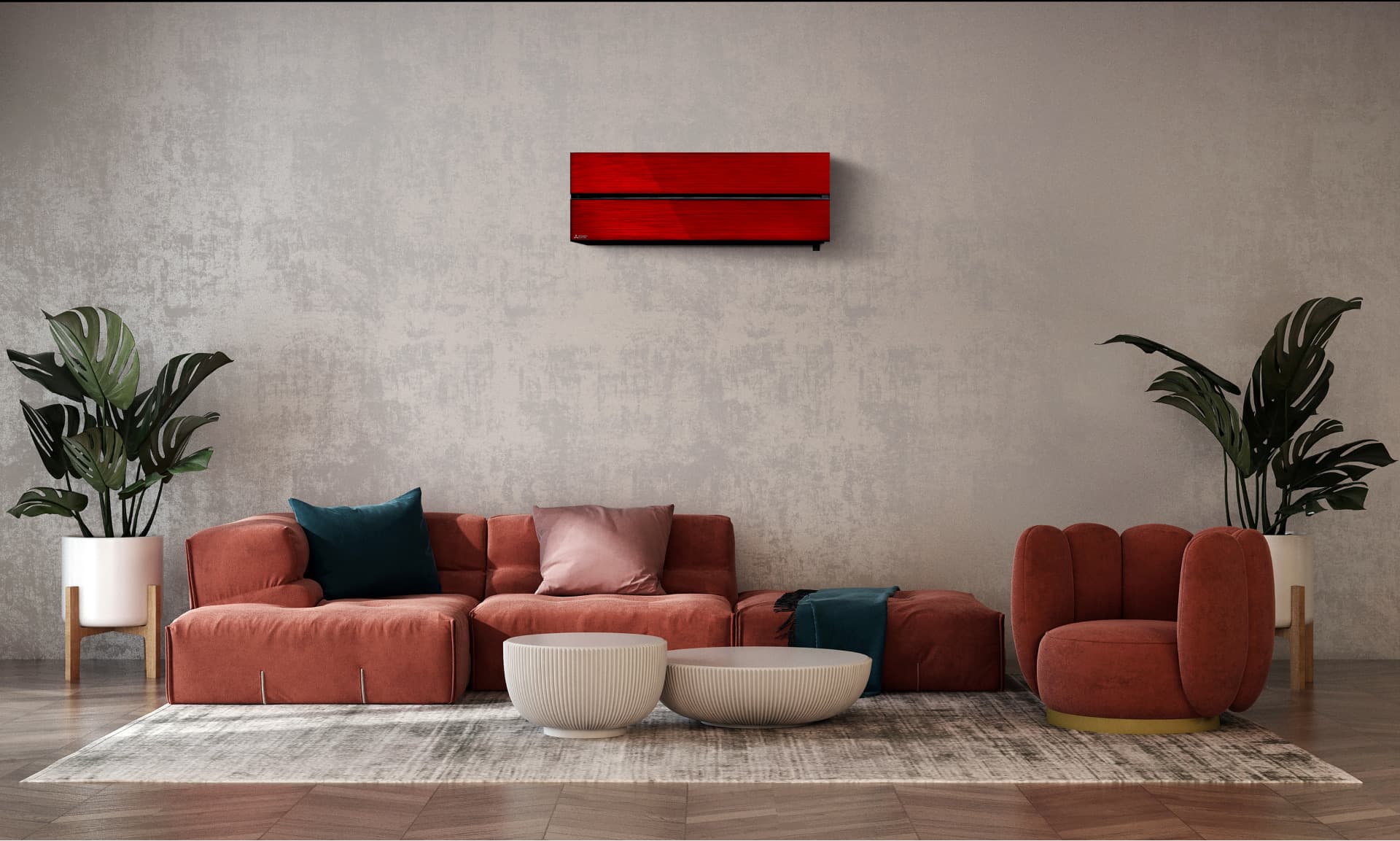
A multi-split system covering the same home puts 4-5 indoor units on walls - one in each conditioned room. Each unit is roughly 800mm wide and 300mm deep. In an open-plan living area that's fine. In a hallway, a small bedroom, or a room with limited wall space, it starts to feel crowded. If you've spent money on a renovation or a new build with a specific interior look, wall-mounted units can work against the design.
For homeowners who care about interiors - and we find most Waikato homeowners doing whole-home heating do - ducted wins this comparison clearly. It's not close.
Cost comparison: what whole-home heating actually costs
For a typical 3-4 bedroom Waikato home wanting all living areas and bedrooms conditioned, here's what the installed costs look like:
Multi-split route
- One outdoor unit + 4 indoor units: $8,000-$14,000 installed
- Each additional indoor unit adds $1,500-$2,500 depending on size and piping complexity
- Install typically takes 1-2 days
Ducted system route
- Concealed indoor unit + ductwork + zone controller: $13,000-$20,000 installed
- Additional zones add $500-$1,000 per room (just ductwork and a grille - no extra indoor unit needed)
- Install typically takes 2-4 days
The upfront gap is real - ducted costs $3,000-$8,000 more for equivalent coverage. But the cost difference narrows as you add rooms. A 6-room multi-split gets expensive fast because every room needs its own indoor unit and refrigerant piping back to the outdoor unit. A 6-zone ducted system just needs more ductwork, which is cheaper per room to extend.
In new builds, ducted is nearly always the better value proposition. Running ductwork during construction - before the ceiling goes on - is dramatically cheaper than retrofitting later. If you're building new in Hamilton, Cambridge, Tauranga, or anywhere in the Waikato, get ducted quoted alongside multi-split. The gap may surprise you.
Zone control: how each system manages rooms
Multi-split gives you independent temperature control per room by default - each indoor unit has its own remote and thermostat. You can run the lounge at 22 degrees, the bedroom at 18 degrees, and leave the spare room off entirely. That's genuine zone control and it's one of multi-split's strongest advantages.
Ducted systems achieve zone control through motorised dampers in the ductwork and a central zone controller. Mitsubishi Electric's zone control system lets you set different temperatures for different rooms, schedule zones to turn on and off at set times, and manage the whole home from a single wall-mounted controller or app.
The practical difference is coordination. With multi-split, each unit is independent - useful for flexibility, but there's no single interface managing the whole home. You're adjusting 4-5 separate remotes. With ducted, one controller runs everything. Set a night mode and every bedroom drops to your preferred sleeping temperature at 10pm while the living areas shut off. That level of whole-home automation is harder to replicate across independent split units.
For families with predictable routines - kids' bedrooms warm by 7pm, living areas off by 11pm, whole house in away mode during work hours - ducted zone control is a genuine quality-of-life upgrade.
Noise comparison
Modern split and multi-split indoor units are quiet - Mitsubishi Electric units run as low as 19 dB on the lowest fan setting. That's barely audible. But there's a catch with multi-split: you have 4-5 of those units running simultaneously in different rooms. Each fan motor creates a subtle hum, and in a quiet house at night the cumulative effect is more noticeable than a single unit in one room.
Ducted systems produce around 25-30 dB at the grille - slightly louder than a split unit's lowest setting, but it's a consistent, diffuse airflow sound rather than a localised fan motor. Most people describe it as white noise. The main fan unit is in the ceiling cavity, so mechanical noise is absorbed by the building structure.
Outdoors, both systems use a single compressor unit of similar size and noise output. Multi-split outdoor units can be slightly louder when multiple indoor units are demanding full capacity simultaneously, but the difference is marginal.
Bottom line: ducted is generally perceived as quieter through the home because the sound source is hidden and diffused. Multi-split is quieter per individual unit, but the multiple sound sources add up.
Maintenance differences
Multi-split maintenance is straightforward but repetitive. Each indoor unit has filters that need cleaning every 4-6 weeks - so with 4 units, that's 4 sets of filters. Each unit also needs a professional service annually. More units means more servicing time and cost.
Ducted systems have one indoor unit to service rather than four or five. Filter cleaning is centralised - one return air filter to access rather than climbing on chairs in multiple rooms. The ductwork itself needs occasional inspection but doesn't require regular maintenance. Zone dampers should be checked during annual servicing to ensure they're opening and closing correctly.
Over a 15-year system life, ducted typically costs less in cumulative servicing because there are fewer components to maintain. Multi-split is simpler if one unit fails - you lose one room's heating rather than the whole system. That redundancy matters in some situations.
Resale value impact
Ducted systems add more perceived value at resale. Real estate agents in Hamilton, Tauranga, and Cambridge consistently list "ducted heating and cooling" as a premium feature in property descriptions. It signals a high-spec home. Multi-split heating is expected rather than aspirational - buyers see wall units as standard, not a selling point.
In the $800,000+ Waikato property market, ducted climate control can genuinely influence buyer perception and final sale price. If you're planning to sell within 5-10 years, the extra investment in ducted often comes back at the negotiation table. For properties under $600,000 or investment rentals, multi-split is usually the pragmatic choice - it meets the Healthy Homes heating standard without overcapitalising.
Which homes suit which system
Ducted suits
- New builds - ductwork is cheapest to install during construction, and you avoid retrofitting costs entirely
- Large homes (4+ bedrooms) - the per-room cost advantage of ducted increases with home size
- Design-conscious renovations- when you have spent money on the interior and don't want wall units compromising the look
- Long-term family homes - the higher upfront cost is offset by lower lifetime maintenance and better resale value
- Homes with adequate ceiling cavity - you need at least 350mm of clear ceiling space for standard ductwork
Multi-split suits
- Older homes with low ceilings - many NZ villas and bungalows lack the cavity depth for ductwork
- Staged budgets- start with 2 rooms this year, add a third next year. Multi-split allows incremental investment that ducted doesn't
- Rental properties - simpler maintenance, tenants understand wall units, and if one fails the others keep running
- Mixed-use spaces - a home office, granny flat, or sleepout that needs completely independent scheduling from the main house
- 2-3 room coverage- when you only need a few rooms conditioned, the overhead of ducted isn't justified
Decision checklist
Run through these questions before your quote. If most answers point the same direction, your decision is straightforward:
- How many rooms? 2-3 rooms: multi-split is usually sufficient. 4+ rooms: ducted starts to make more sense financially and aesthetically
- New build or retrofit?New build: ducted is cost-effective. Retrofit: check ceiling cavity depth first - if it's under 350mm, multi-split may be your only option
- How long are you staying? 10+ years: ducted delivers better lifetime value. Shorter term: multi-split avoids overcapitalising
- Budget flexibility? Full budget available now: either option. Need to stage the investment: multi-split lets you add rooms over time
- Aesthetics matter?If visible wall units bother you, ducted is the answer. If you don't mind them, multi-split saves money
- Is it a rental? Multi-split is almost always the right call for investment properties - simpler, cheaper, and tenants can operate it without instruction
- Do you want whole-home automation? If scheduled zone control, night modes, and single-controller management appeals, ducted delivers this natively
Running costs: which is cheaper to operate
Modern ducted and multi-split systems use inverter technology and achieve similar energy efficiency ratings. The difference in running costs comes down to how you use them rather than the technology itself.
Multi-split units often stay running in rooms that aren't being used because nobody bothers to walk to each room and turn them off. Ducted zone control automates this - zones shut down on schedule or when temperatures are reached. In practice, well-configured ducted systems tend to use less energy than multi-split setups in the same home because the automation prevents waste.
For a 4-zone home in the Waikato, expect annual electricity costs of $600-$1,200 for either system type, depending on insulation quality, how many hours per day the system runs, and your temperature preferences. The system type matters less than good insulation and sensible usage habits.
Being honest: when multi-split is the smarter choice
We install both systems, and we'd rather you get the right one than the expensive one. Multi-split is genuinely the better answer in these situations:
- Your ceiling cavity is too shallow or inaccessible for ductwork
- You can only afford 2 rooms now and want to add more later - multi-split scales incrementally
- The property is a rental and you want the simplest, most tenant-proof solution
- You have a detached granny flat or home office that needs its own independent climate control
- The home is under 120m2 with only 2-3 rooms needing conditioning - ducted is overkill
- You plan to sell within 2-3 years and don't want to overcapitalise
There's no point paying the premium for ducted if the home or the situation doesn't warrant it. A well-installed multi-split system from a quality brand like Mitsubishi Electric will heat and cool your home reliably for 15-20 years. The decision is about priorities, not one system being objectively better than the other.
Frequently asked questions
Is a ducted system or multi-split heat pump better for a 4-bedroom NZ home?
For a 4-bedroom home where you want every room conditioned, ducted is usually the stronger choice because it eliminates wall units entirely and delivers cleaner zone control from a single system. Multi-split works well too, but you end up with 4-5 indoor units on walls and an outdoor unit that works harder managing independent circuits. If ceiling cavity space is available and you plan to stay long-term, ducted delivers better value over 15+ years.
How much more does a ducted system cost than multi-split in NZ?
For whole-home coverage of a typical 3-4 bedroom Waikato home, ducted runs roughly $13,000-$20,000 installed while an equivalent multi-split setup costs $8,000-$14,000. The gap narrows as you add more rooms because each additional split indoor unit adds cost, whereas ducted just needs another duct run and grille. In new builds, ducted is often only $3,000-$5,000 more than multi-split for the same coverage.
Can I zone a multi-split system the same way as ducted?
Each indoor unit on a multi-split runs independently, so you get room-by-room temperature control by default - that part is comparable. Where ducted pulls ahead is scheduled zone programming and whole-home coordination through a single controller like Mitsubishi Electric's zone controller, which can manage airflow balance, night setback temperatures, and away modes across every room from one interface.
Which is quieter indoors - a ducted system or multi-split heat pump?
Ducted systems are generally quieter indoors because the fan unit sits in the ceiling cavity and only the soft movement of air through grilles is audible - typically around 25-30 dB. Multi-split indoor units produce around 19-24 dB at low fan speed per unit, but with 4-5 units running simultaneously in different rooms, the cumulative presence of multiple fan motors is more noticeable through the home.
Does ducted or multi-split add more resale value to a NZ home?
Ducted systems consistently add more perceived value because buyers see a premium, invisible climate solution rather than wall-mounted units in every room. Real estate agents in Hamilton and Tauranga regularly note that ducted is a selling point in the $800K+ bracket. Multi-split still adds value over no heating, but it reads as functional rather than aspirational to most buyers.
When does a multi-split heat pump actually make more sense than ducted?
Multi-split is the better choice when your ceiling cavity is too shallow for ductwork (common in older NZ villas), when you are staging the investment over several years, when the property is a rental where simple maintenance matters, or when you only need 2-3 rooms conditioned rather than the whole home. It also suits homes with mixed-use spaces like a home office or granny flat that need independent scheduling.