Most NZ homes default to high-wall heat pumps, and in most cases that is the right call. But floor consoles exist for a reason - and in certain room layouts they are genuinely the better option. Here is an honest comparison to help you decide which type suits your space.
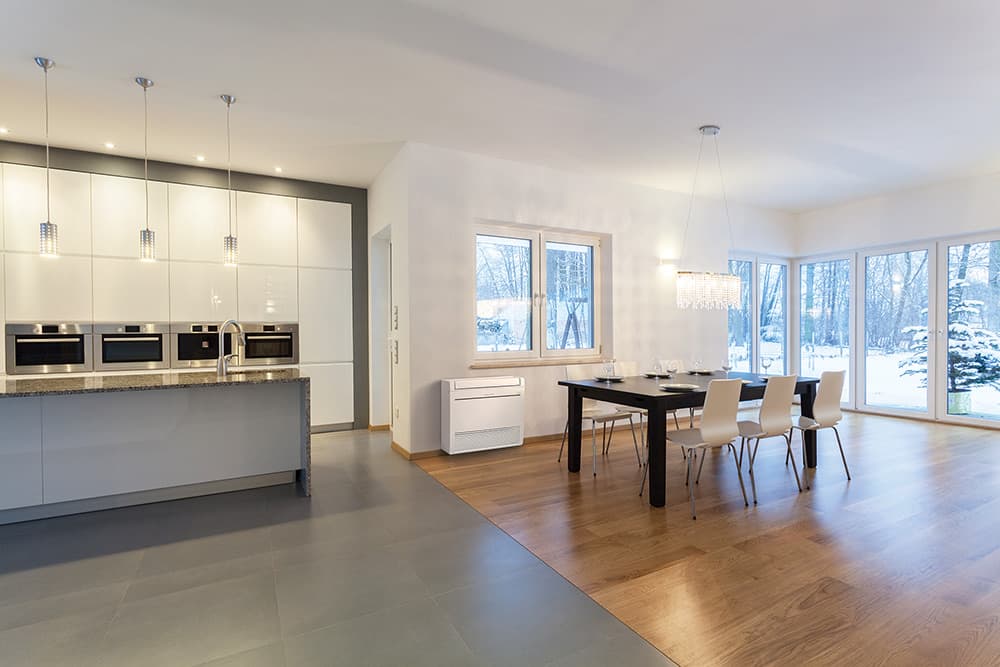
The quick answer
Choose a high-wall unit if you have adequate wall space above head height and want the cheapest, most versatile option. Choose a floor console if you have low windows, no suitable wall space for a high-wall unit, or specifically want better heat distribution from floor level.
About 80% of the residential installs we do across the Waikato are high-wall. The remaining 20% are floor console or ducted, almost always because the room layout makes high-wall impractical.
When to choose a high-wall unit
High-wall heat pumps are the default for good reasons. They work in most rooms, cost less, and the range of available models is much wider.
- Standard room layout: if you have a clear wall section at least 900mm wide and 300mm tall above head height, a high-wall unit fits fine
- Cooling is a priority: high-wall units distribute cool air more effectively because the cold air naturally falls and circulates across the room
- Budget matters: high-wall units are $300-$600 cheaper than comparable floor consoles and there are more models to choose from across brands
- Floor space is limited: a high-wall unit takes up zero floor space. In small bedrooms or studies, this can be a deciding factor
- Children and pets: mounted high on the wall, the unit is out of reach of toddlers and pets. Floor consoles sit at ground level where they can be bumped or have things pushed into the vents
When to choose a floor console
Floor consoles solve specific problems. If one of these describes your room, it is probably the right choice.
- Low windows or ranch sliders: no wall space above the window frame for a high-wall unit, but the wall section below the sill is perfect for a floor console sitting 600mm tall
- Older homes with limited clearance: NZ villas, bungalows, and 1960s-70s homes often have low ceilings, picture rails, or wall framing that makes high-wall mounting awkward
- Glass walls or conservatories: rooms with floor-to-ceiling glazing leave no wall for a high-wall unit. A floor console fits neatly under the glass
- Heating is the main priority: warm air from a floor console rises naturally from ground level, creating more even temperatures from floor to ceiling. High-wall units blow warm air downward, which can stratify with warm air sitting at ceiling height and cooler air at floor level
- Accessibility: filters sit at a reachable height for cleaning. The controls and filter panels do not require a step ladder, which matters for elderly homeowners or anyone with mobility limitations
- Bedrooms with problematic layouts: if the only suitable wall for a high-wall unit puts it directly above the bed head, a floor console on a different wall avoids blowing air straight down onto the pillow
Cost comparison
Floor consoles cost more, but the gap is not huge. Here are typical installed prices for both types in the Waikato.
| Capacity | High wall installed | Floor console installed | Difference |
|---|---|---|---|
| 2.5 kW | $2,800-$3,400 | $3,200-$4,000 | +$400-$600 |
| 3.5 kW | $3,200-$4,000 | $3,800-$4,500 | +$500-$600 |
| 5.0 kW | $4,000-$5,200 | $4,500-$5,500 | +$300-$500 |
Installation differences
Both types connect to a standard outdoor unit via refrigerant pipework. The installation process is similar, but there are a few differences worth knowing.
- Pipe entry point: high-wall pipes exit through the wall at ceiling height. Floor console pipes exit at floor level. Neither is inherently easier - it depends on your wall construction and where the outdoor unit sits
- Condensate drainage: high-wall units drain by gravity in most installations. Floor consoles often need a condensate pump ($150-$250 extra) because there is no gravity path at floor level
- Wall preparation: floor consoles may need skirting board removal behind the unit. High-wall units need a solid mounting bracket screwed into framing or masonry
- Semi-recessed option: some floor consoles can be partially built into the wall cavity for a flush finish. This adds $200-$500 for the carpentry but looks very clean. High-wall units cannot be recessed
Aesthetics and room impact
Neither type is invisible, but they affect the room differently.
- High-wall units sit above eye level and are easy to ignore. Most people stop noticing them after a week. Modern units are slim and white - they blend into most walls
- Floor consoles are at eye level when sitting and more visually present. However, they look like a clean panel and can be less obtrusive than a large high-wall unit in some room layouts - especially under a window where they blend with the sill line
Efficiency comparison
In terms of energy efficiency (COP/EER), floor consoles and high-wall units from the same brand and series are virtually identical. The Mitsubishi Electric MFZ-KJ floor console has the same compressor technology and similar COP ratings to the equivalent MSZ-AP high-wall model.
The practical difference is in comfort, not consumption. Floor consoles provide more even heating (warm air rising naturally). High-wall units provide more even cooling (cool air falling naturally). Running costs for the same size room will be essentially the same with either type.
Frequently asked questions
Is a floor console heat pump better than a high wall?
Neither is universally better - they suit different situations. Floor consoles are better when you have low windows, limited wall space above head height, or want more even heating from floor level. High wall units are better for most standard rooms because they are cheaper, cool more effectively, and have more models available. Choose based on your room layout, not brand marketing.
How much more does a floor console cost than a high wall?
A floor console typically costs $300-$600 more than a comparable high-wall unit from the same brand and capacity. For example, a Mitsubishi Electric MFZ-KJ35 floor console installed runs about $3,800-$4,500, while the equivalent MSZ-AP35 high-wall is $3,200-$4,000. The price difference is in the unit cost - installation labour is roughly the same.
Can I put a floor console under a window?
Yes - this is one of the main reasons to choose a floor console. The unit sits neatly below the window sill, typically only 600mm tall, leaving the glass unobstructed. This works especially well under ranch sliders, large picture windows, and low-sill windows in older NZ homes where there is no room for a high-wall unit above the frame.
Are floor console heat pumps good for cooling?
Floor consoles cool adequately but high-wall units have the edge for cooling performance. Cool air from a high-wall unit falls naturally and distributes well across the room. Cool air from a floor console rises initially but tends to pool at low levels. For rooms where cooling is the priority - north-facing living rooms in summer - a high-wall unit is usually the better choice.
Do floor consoles take up much floor space?
A typical floor console is about 700mm wide, 600mm tall, and 200mm deep - roughly the size of a panel heater. You also need 50-100mm clearance on each side. It does take up more usable space than a high-wall unit mounted above head height, and you cannot push furniture flush against the wall where it sits.
Which brands make good floor console heat pumps?
Mitsubishi Electric MFZ-KJ series is the most popular floor console in NZ and the one we install most. Daikin FVXS is a strong alternative with comparable quality and a two-way discharge feature. Fujitsu AGTV is a solid budget option. All three are reliable brands with good NZ parts and warranty support.