Every heat pump brand now has an app. Some are genuinely useful - scheduling, geofencing, energy tracking. Others are glorified remote controls that crash on Tuesdays. Here's what smart heat pump control actually looks like in NZ, which platforms are worth using, and when it makes sense to upgrade from the basic remote.
1. Built-in WiFi vs aftermarket controllers
Modern heat pumps fall into two camps: units with WiFi built into the indoor unit from the factory, and older units that need an add-on controller. The distinction matters because it changes what you can actually do.
Built-in WiFiconnects directly to the heat pump's control board. This means deeper integration - real-time energy monitoring, error code reporting, firmware updates, and two-way communication between the app and the unit. Most Mitsubishi Electric, Daikin, and Hitachi units sold in NZ since 2022 have WiFi built in or as a plug-in module.
Aftermarket controllerslike Sensibo sit near the heat pump and mimic the infrared remote. They're clever but limited - they can turn the unit on/off, change temperature and mode, and run schedules, but they can't read actual energy consumption or pull error codes from the unit. Good for adding smart control to an older system; not worth it if your unit already has native WiFi.
2. Brand-specific apps worth knowing
Mitsubishi Electric MELCloud
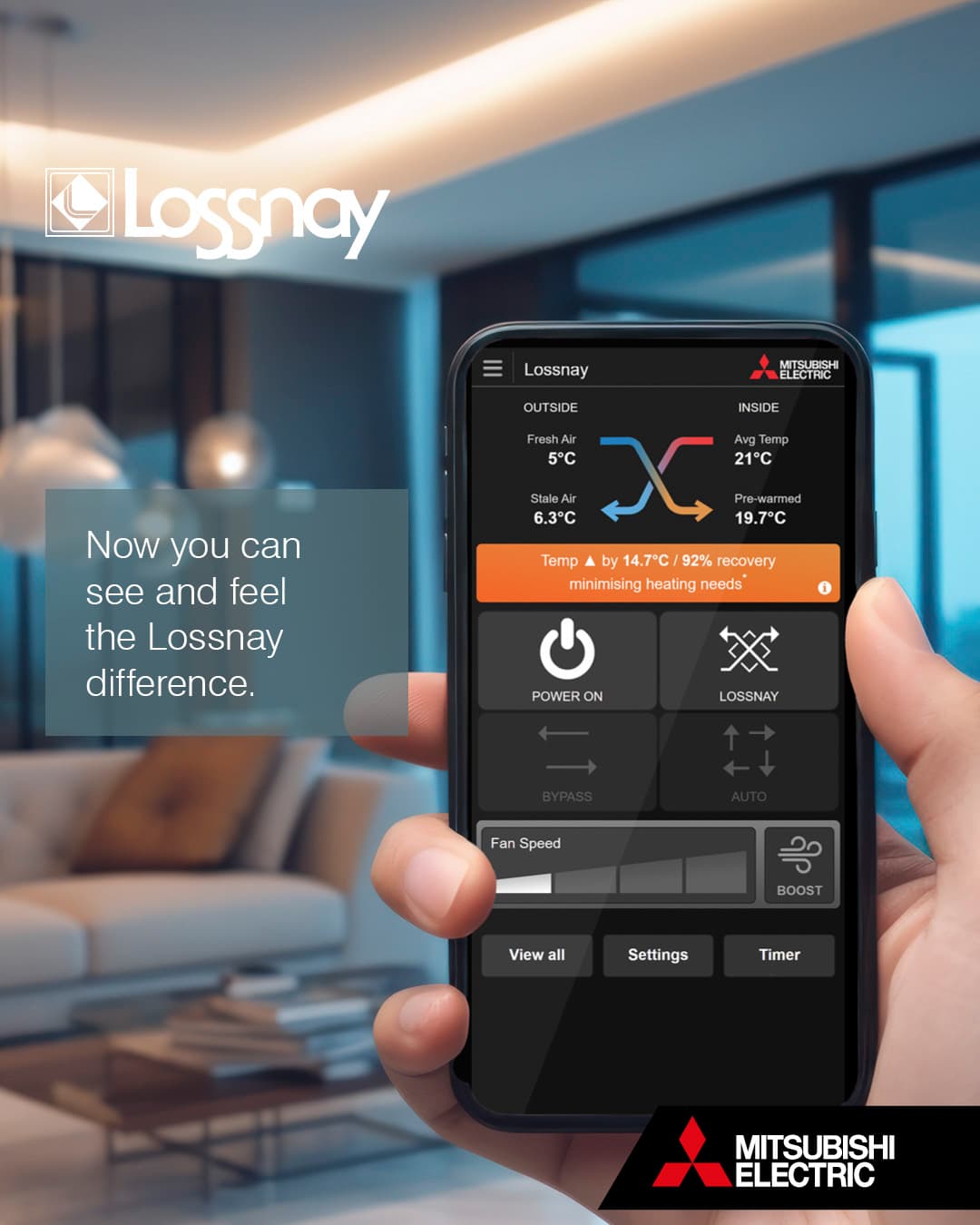
MELCloud is Mitsubishi Electric's cloud platform and it's the most mature option in NZ. You get remote on/off, temperature control, scheduling, energy consumption tracking, and holiday mode. The app handles multiple units across different locations, which is handy for landlords managing several properties. Requires a WiFi adapter (built-in on newer models, ~$150-$250 retrofit on older ones).
Daikin Onecta
Daikin's current app (replacing the older Daikin Online Controller). Clean interface, solid scheduling, energy monitoring, and integration with Google Home and Alexa. Works with most Daikin split and ducted systems sold in NZ. The standout feature is detailed energy reporting that breaks down usage by day, week, and month - useful for spotting wasteful habits.
Sensibo (universal aftermarket)
Sensibo is the go-to for adding smart control to any heat pump with an IR remote. The Sensibo Air and Sky models learn your remote codes and replicate them via WiFi. The app is polished, supports geofencing (turn on when you're heading home), climate react (turn on/off based on temperature), and integrates with Google Home, Alexa, and Apple HomeKit. At $150-$250, it's the cheapest way to add smart control to an older system.
3. AirTouch 5 for ducted systems
If you have a ducted heat pump - or you're planning one - the AirTouch 5 is worth a serious look. It replaces the basic zone controller with a touchscreen panel and smartphone app that gives you:
- Individual zone temperature control: set different temperatures for each room rather than just on/off per zone
- Percentage-based airflow: send 80% airflow to the living room and 20% to an empty bedroom instead of all-or-nothing
- Per-zone scheduling: heat the bedrooms from 6-7am, switch to living areas at 8am, no manual fiddling
- Energy savings: by reducing airflow to unoccupied zones, AirTouch typically cuts ducted running costs by 20-30%
- Smart home integration: Google Home and Alexa voice control for hands-free adjustments
AirTouch 5 works with Mitsubishi Electric, Daikin, and other major ducted brands. Installed cost runs $1,500-$3,000 depending on zone count. For a whole-home ducted system, it pays for itself in energy savings within 3-5 years. Read more in our ducted vs split heat pumps guide.
4. What smart control actually lets you do
Beyond the novelty of turning the heater on from the couch, here are the features that genuinely save money and improve comfort:
Scheduling
Set weekly schedules so the heat pump runs when you need it and switches off when you don't. A Waikato family running a 5 kW unit 6 hours a day instead of 10 saves roughly $200-$350 per winter. Every smart platform supports this - it's the single biggest money-saver.
Geofencing
Draw a virtual boundary around your home. When your phone leaves the area, the heat pump turns off (or drops to eco mode). When you cross back into the zone, it fires up so the house is warm by the time you walk in. Sensibo and MELCloud both support this. It's particularly good for people with irregular schedules.
Energy monitoring
Native apps from Mitsubishi Electric and Daikin show actual energy consumption - not estimates, but real kWh data from the unit. This lets you see exactly what your heating is costing, spot patterns (running all night when you could schedule off at midnight), and compare month-on-month. Aftermarket controllers can only estimate based on run time.
Zone management
For multi-split or ducted systems, zone management lets you heat occupied rooms and shut off empty ones. This is where the real savings stack up - a family of four with a five-zone ducted system typically only uses 2-3 zones at any given time. AirTouch 5 is the best option here for ducted; for multi-split, each unit runs independently through its own app.
5. Smart home integration
If you're already running Google Home, Alexa, or Apple HomeKit, here's what connects:
- Google Home: MELCloud, Daikin Onecta, Sensibo, AirTouch 5
- Amazon Alexa: MELCloud, Daikin Onecta, Sensibo, AirTouch 5
- Apple HomeKit: Sensibo (native), others via Homebridge workarounds
Voice control sounds gimmicky but it's genuinely handy - "Hey Google, set the living room to 21 degrees" is faster than finding the remote. The real value is in automations: if your smart home detects everyone has left, turn off all heat pumps. If a window sensor detects an open window, pause the heat pump in that room.
6. When it's worth upgrading
Not everyone needs smart control. Here's when it genuinely pays off:
- You forget to turn the heat pump off: scheduling and geofencing eliminate this - easily worth $200+/year in wasted power
- You manage rental properties:MELCloud lets you monitor units remotely, check they're being used sensibly, and get error alerts before a tenant calls
- You have a ducted system: AirTouch 5 zone control pays for itself in reduced running costs
- You want to pre-heat the house before getting home: the classic use case. Set the heat pump going 20 minutes before you arrive rather than walking into a cold house
- You're buying a new unit anyway:WiFi is built into most modern heat pumps at minimal extra cost - just make sure it's enabled during install
If your heat pump is less than 5 years old and already has WiFi capability, check with your installer whether it just needs activating - many units ship with WiFi hardware but it's never configured during install. A quick setup visit is much cheaper than buying an aftermarket controller.
Frequently asked questions
Can I control my heat pump from my phone?
Yes - most heat pumps sold in NZ today have built-in WiFi or an optional WiFi adapter that connects to the manufacturer's app. Mitsubishi Electric uses MELCloud, Daikin uses Onecta, Hitachi uses airCloud Home. If your unit doesn't have native WiFi, aftermarket controllers like Sensibo can add smart control to almost any heat pump with an IR remote.
What is the best smart controller for a ducted heat pump?
The AirTouch 5 is the standout option for ducted systems in NZ. It gives you individual zone control with percentage-based airflow adjustment, scheduling per zone, and integration with the manufacturer's system. It works with Mitsubishi Electric, Daikin, and other major brands. For simpler needs, the manufacturer's own app may be enough.
Does Sensibo work with any heat pump?
Sensibo works with any heat pump that uses an infrared remote control, which covers the vast majority of wall-mounted split systems in NZ. It sits near the unit, learns your remote codes, and sends IR signals on command from the app. It won't work with ducted systems or units that only use wired wall controllers.
Is MELCloud free to use?
Yes - Mitsubishi Electric's MELCloud app is free to download and use with no subscription fees. You just need a compatible Mitsubishi Electric heat pump with a WiFi adapter installed (built-in on newer models, ~$150-$250 as an add-on for older ones). The app gives you remote on/off, temperature, mode, scheduling, and basic energy monitoring.
Can I connect my heat pump to Google Home or Alexa?
It depends on the brand and controller. MELCloud integrates with Google Home and Alexa for voice control. Daikin Onecta supports Google Home and Amazon Alexa. Sensibo supports Google Home, Alexa, and Apple HomeKit. AirTouch 5 also has Google and Alexa integration. Native Apple HomeKit support is limited - Sensibo is the most reliable path.
How much does a smart heat pump controller cost in NZ?
Built-in WiFi on a new heat pump adds $0-$250 depending on the model. A Sensibo aftermarket controller costs $150-$250. An AirTouch 5 system for ducted setups runs $1,500-$3,000 installed depending on the number of zones. The manufacturer apps (MELCloud, Onecta) are free once the hardware is connected.